Free facility & workplace knowledge risk assessment

Know what your building forgets before your best people leave.

Find out how much of your building lives only in people's heads, and get a plan to put it where your team and your AI tools can use it.

Knowledge risk score · Example
Office · 3 buildings
High risk
64/ 100
01540100
Central HVAC plant100
Emergency power55
Front of house36
Building automation18
Fire & life safety8
AI readiness34 / 100Not ready
View over the Chicago River from a high-rise office lounge at sunset

Every building runs on what its people know.

Where the water shutoff is when the pantry sink leaks. Who can fix the boardroom AV five minutes before a client meeting. What the VIP expects for all visits. Then that person takes a week off, or a new job, and the next problem lands on someone who has never dealt with it before.

Why now

Two pressures are landing on the same teams

Roles are changing hands just as AI tools arrive that depend on what people know.

Nearly40%

of facility managers expect to retire within the next ten years.

IFMA, 2026 · global ↗
67%

of US facilities teams already use AI. The barrier they cite most to using more is data quality.

Johnson Controls, 2026 · US ↗
What you get

See what you'd lose, and what to do about it

Your results come with a six-month plan you can start this week.

Knowledge risk score

A 0 to 100 score for your building and for each area, weighted toward life safety.

Asset list health

How complete and current your equipment list is, which details are missing, and a free template to fix it.

AI readiness

Five pillars, your biggest blocker, and which AI uses your data could support today.

Action plan and goals

A six-month plan with owners and effort for each step, goals with clear targets and dates, and a one-page report for leadership.

Example goalWithin 60 days, a second team member can run a full client visit, from visitor badges to boardroom AV, using only the written checklist.

Example goalWithin 45 days, a second technician can troubleshoot a too‑hot or too‑cold call, from checking the zone schedule in the building automation system to checking the VAV box, using only the one-page guide.

How it works

Your gut feeling, turned into a plan

Answer from experience. There's nothing to gather or upload first.

A technician holding a tablet beside pumps and pipework in a building plant room
Works on a phone or tablet, so you can answer from the floor.
1

Pick your path

Front of house, facilities or a bit of both. Then your building, your equipment or vendor list, and where your information lives.

2

Score the areas that are yours

Eight to thirteen areas, from the HVAC plant to the front desk, depending on your path. Skip what doesn't apply and add what we missed.

3

Get your results

Your knowledge risk score, AI readiness, a phased action plan and goals with dates. Forward them to leadership the same day.

What it covers

Both sides of the building

Knowledge lives at the front desk as much as in the mechanical room. The screening covers what visitors see every day and what only your engineers ever see.

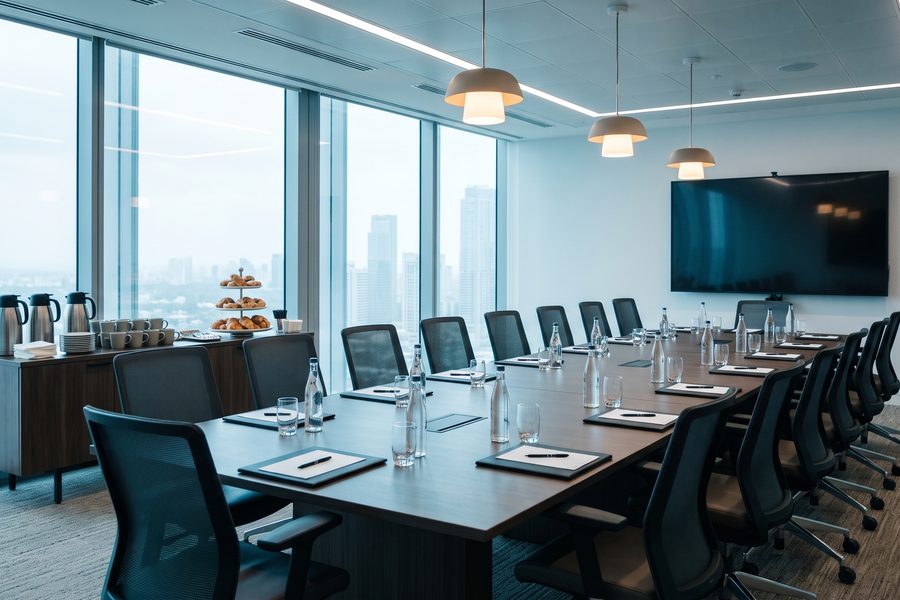
A coordinator at a modern office reception desk laying out visitor badges, glass-walled offices behind herA conference room set for a client meeting, with notepads, water and a coffee and pastry service by the windowA fully stocked office pantry with a drinks fridge, fruit, espresso machine and a team member restocking shelves

The experience people see

Reception, visitor check-in, deliveries, events and VIP arrivals, plus the safety and security plans behind them. In a lot of buildings, the whole playbook lives with whoever has been there longest.

Front of houseAccess & securityHealth, safety & security
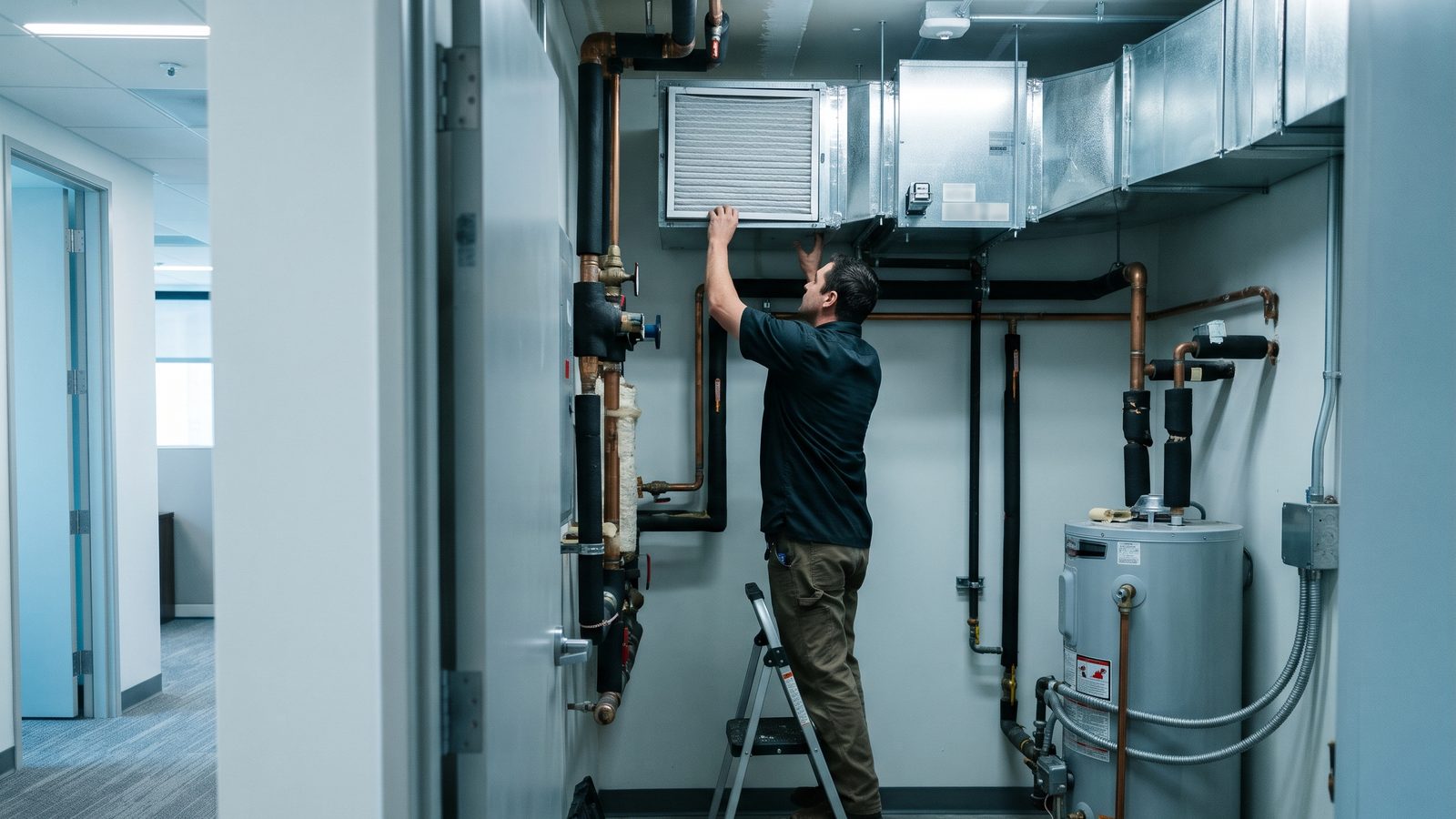
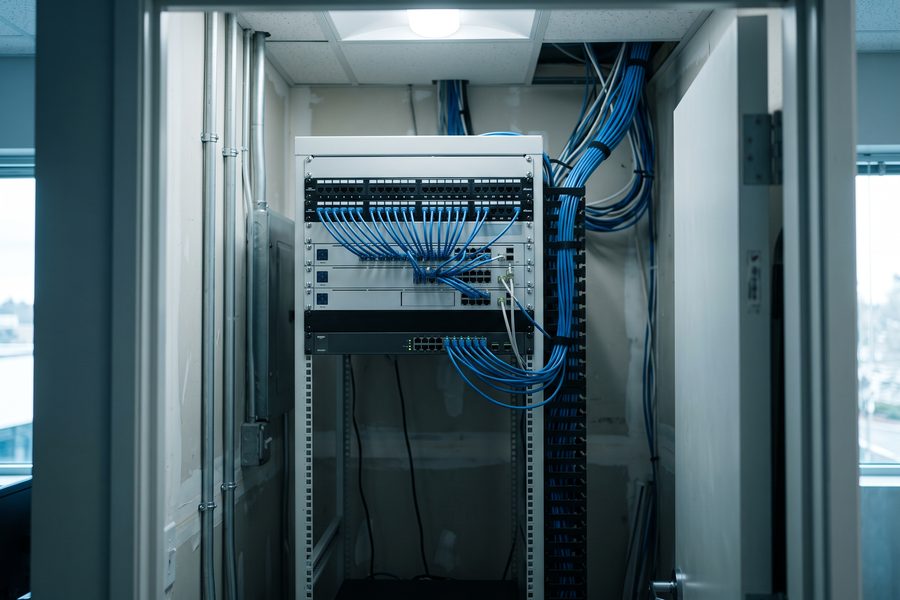
A technician on a step stool replacing the filter on a ceiling-hung air handler in a mechanical room off an office corridorA technician lying under an office pantry sink, checking the pipes and shutoff valves with a flashlightA small network closet off an office floor, with patch cables running from patch panels down to network switches

The systems that keep it running

The plant, power, fire and life safety, automation and water, and the drawings and records behind them. Ask who really understands them, and most teams name the same engineer.

HVAC plantElectricalFire & life safetyBuilding automationPlumbing & waterBuilding & site info
The method

How the scores work

Both scores come from your answers, and every factor and weight is shown here.

Knowledge risk score

How exposed each area is if one person leaves

Each area gets four ratings that multiply together. A critical system that one person understands, with little written down and a retirement coming, scores highest.

  • CriticalityHow bad a failure would be
  • Who can run itHow many people could handle it alone
  • DocumentationWhat's written down, current and reviewed
  • TurnoverHow soon the role may change hands
Low 0–14Moderate 15–39High 40+
See the formula Risk = Criticality × Concentration × Documentation gap × Turnover ÷ 3 × 100

The building's score is a weighted average, so life-safety areas count most. Any critical area in the red raises the whole building to high risk.

AI readiness

Whether your data can support the AI tools you're considering

AI tools learn from your equipment list, work history, procedures and building data. Each of these is scored and weighted.

  • Data foundationWhere equipment data lives and how complete it is
    30%
  • Work history and namingWork order codes and consistent equipment names
    20%
  • Documented know-howProcedures that are written, current and reviewed
    20%
  • Connected systemsAccess to BAS and meter trend data
    15%
  • Ownership and rulesA data owner and rules for using AI
    15%
Not ready under 45Partly 45–69Ready 70+
See the formula AI readiness = weighted average of the five pillars

If the data foundation scores under 40, AI readiness is capped at 44, because every AI use depends on it. Ownership and rules is scored in detailed mode; quick mode re-weights the other four.

These weights are our starting point, and we're refining them with facility managers as results come in. Read the full methodology (v1.0.1) →

Questions

Before you start

The questions facility managers ask most. Anything else, use the feedback box on your results page.

Is it really free? What's the catch?

Yes. The screening, results, action plan, goals, report and asset list template are yours to use on their own. There's nothing to buy and nothing to sign up for.

Who sees my answers?

Nobody. Your screening answers are saved only in the browser on your device. We count anonymous totals, such as how many screenings were finished. If you choose to send a form or join the newsletter, we keep only what you send. Details are in our privacy policy.

How accurate is the score?

It's a structured first look built from your own answers, and it doesn't replace an on-site inspection. It's good at showing where to start and how areas compare with each other. A walk-through confirms the details. The formulas are published on this page so you can check the math.

Who is it for?

Anyone who will be running the building when today's experts move on: facility and operations managers, rising engineers and workplace leads. It works for one building or a whole portfolio.

Do I need a CMMS or any software?

No. It works whether your equipment data lives in a CMMS, in spreadsheets or in binders. Where it lives is one of the things the AI readiness score looks at.

What should I do with the results?

Start with the This week list, share the report with leadership, and put the rescreen date from your goals in your calendar. Running it again in six months shows how far you've come.


About this tool

Built for the people who keep buildings running

Every building has a few people who just know things. Torchpass helps you capture that knowledge while they're still here, and get it into a shape your team and your future AI tools can use.

Your results come with a plan your team can work through on its own.

I'm still testing the scoring with facility managers. If your results don't match what you know about your building, tell me. That's the feedback that makes it better.

Find out what your building would forget

Your results include a six-month plan, dated goals and a free asset list template.

Read the articles
New guides, straight to your inboxPractical articles and new Torchpass tools, about once a month. Unsubscribe anytime.